
What Is SEO Analysis?

In today’s digital-first world, having a website isn’t enough. If people can’t find your site on Google, your online presence is almost invisible. That’s where SEO analysis comes in. SEO analysis helps businesses understand how well their website performs in search engines and what needs improvement to attract more traffic, leads, and customers.
This guide explains what SEO analysis is, why it matters, and how it helps websites rank higher in search results—using simple language and practical examples.
Understanding SEO Analysis
What Does SEO Analysis Mean?
SEO analysis refers to the practice of analyzing a web site in order to determine its search engine optimization (Googling and Bing). It also analyzes various components of your site including content, keywords, technical structure and back links among others to determine the strengths, weaknesses, and areas of improvement.
In a simple way, SEO analysis provides answers to questions such as:
- Why is my website not ranking?
- Which keywords are the ones I need to target?
- Do my technical problems impair the performance of the site?
- How do competitors rank better than me?
Why SEO Analysis Is Important
Improves Search Engine Rankings
SEO analysis assists in determining what is not allowing your site to be on the first page of Google. Fixing those problems will put you in a better position to rank higher in the search results where the majority of the users will be.

Drives More Organic Traffic
Organic traffic is the visitors to your site that came up as a result of unpaid searches. An effective SEO analysis would enable you to capture more of this quality traffic without having to use a lot of advertisements.
Enhances User Experience
Google is more concerned with websites that offer excellent user experiences. SEO analysis considers such aspects as page speed, mobile-friendliness, and site structure – that is, how your site is easier and more pleasant to use.
Helps You Stay Competitive
SEO analysis gives you an opportunity to understand what your competitors are doing well. Knowing what they are doing will allow you to make your own strategies better and be ahead of the curve in your industry.
Key Components of SEO Analysis
Keyword Analysis
What Is Keyword Analysis?
Keywords analysis is done to determine what people are searching in search of products, services or information which concern your business.
Why Keywords Matter
The correct keywords will help you to be relevant to what the users are searching.
SEO analysis evaluates:
- Search volume
- Keyword difficulty
- User intent
- Relevance to your business.
As an illustration, a bakery that is located in the United States may focus on key words such as best cupcakes in Chicago rather than broad key words such as cupcakes.
On-Page SEO Analysis
Content Quality
Search engines attract quality and useful content. SEO analysis reviews:
- Readability
- Keyword usage
- Content length
- Originality
- Relevance to the audience.
People should be the first priority of the content and not only search engines.
Title Tags and Meta Descriptions
Title tags and meta descriptions are what users see in search results.
SEO analysis checks whether they:
- Include target keywords
- Are the correct length
- Encourage clicks
- Header Tags (H1, H2, H3)
The right heading structure not only increases the level of readability but also allows search engines to interpret the hierarchy of your content.
Technical SEO Analysis
Website Speed
Slow websites annoy people and damage ratings. SEO analysis determines the page load time and can detect the problems such as huge images or redundant scripts.
Mobile-Friendliness
Google applies the mobile-first indexing with the majority of the Americans browsing through smartphones. SEO analysis will verify the smooth functionality of your site on mobile devices.
Crawlability and Indexing
Your pages have to be crawled and indexed by search engines.
SEO analysis looks for:
- Broken links
- Duplicate content
- Incorrect redirects
- txt or sitemap errors
Off-Page SEO Analysis
Backlink Profile
Backlinks are links from other websites to yours.
They signal trust and authority. SEO analysis evaluates:
- Number of backlinks
- Quality of linking sites
- Relevance of anchor text
Back links with reputable websites based in the U.S. should be of high quality and are likely to boost rankings greatly.
Brand Mentions
SEO will also be affected by even unrelated mentions of the brand. SEO analysis usually examines the frequency and location of the references of your brand on the internet.
Competitor SEO Analysis
Why Analyze Competitors?
Competitor analysis makes you know:
- Which keywords do theyrank for?
- Which content is the most effective one?
- The source of their back links.
This observation can make you identify the weaknesses and loopholes in your own SEO plan.
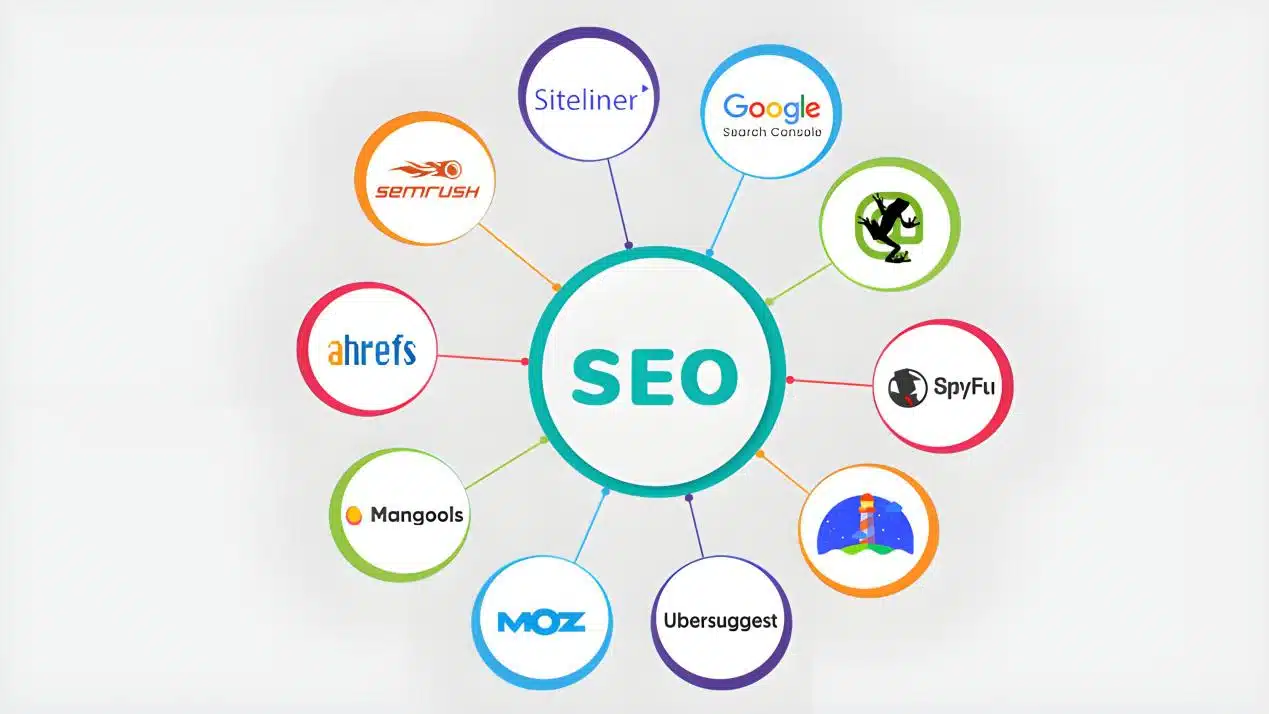
SEO Analysis Tools Commonly Used
The following are some of the popular SEO analysis tools:
- Google Search Console
- Google Analytics
- SEMrush
- Ahrefs
- Moz
These tools give information about traffic, key words, technical problems and back links, and thus the analysis of SEO is more precise and practical.
How Often Should You Perform SEO Analysis?
SEO is not a one-time task.
Most experts recommend:
- SEO monthly checkups of small websites.
- Greater or competitive sites are monitored weekly.
- Full SEO audits every 3-6 months.
Regular analysis helps you adapt to Google algorithm updates and changing user behavior.
SEO Analysis vs. SEO Audit
What’s the Difference?
While the terms are often used interchangeably, there is a small difference:
- SEO Analysis is continuous monitoring and assessment.
- SEO Audit is an intensive, detailed audit that is carried out at regular intervals.
Both are essential for long-term SEO success.
Common SEO Analysis Mistakes to Avoid
- Looking at keywords and not at the intent of the user.
- Ignoring mobile performance.
- Overlooking local SEO in the U.S. based businesses.
- Failure to monitor performance of changes.
- Depending on the old-fashioned SEO.
 Bill Yeager, Co-Owner of High Point SEO & Marketing in CT


