
Is Coding Part of Website Design?

When people think about website design, they often imagine colors, layouts, and beautiful visuals. However, there’s an important question behind the scenes: Is coding part of website design? The answer is both simple and nuanced. Coding plays a significant role in website design, but the extent depends on the type of design work being done.
What Is Website Design?
Website design can be defined as the development of the physical appearance and experience of a web site.
It includes elements like:
- Layout and structure
- Colors and typography
- Images and graphics
- Navigation and usability
Website design aims at making a site attractive and user friendly. The design must be good so that the visitors can easily locate what they want and have fun.
What Is Coding?
Coding/programming refers to the act of creating instructions to be followed by a computer in order to accomplish certain tasks. Coding, as far as websites are concerned, is what makes a design come to life.
The languages that are commonly used in web development are:
- HTML (for structure)
- CSS (for styling)
- JavaScript (to be interactive)
A site would have been just an image without coding because the site is not interactive.
Is Coding Required for Website Design?
The Short Answer
Yes, coding is commonly involved with web design- but not necessarily by the web designer.
The Long Answer
Website design can be divided into two main areas:
- UI/UX Design (User Interface and User Experience)
- Web Development (Front-end and Back-end Coding)
UI/UX designers are more concerned with graphics and user navigation, whereas the developers code the graphics into actual websites.
However, in most instances, particularly in small projects, the basic skills of coding are required by the designers in order to apply their ideas.
How Coding Supports Website Design
Turning Designs into Reality
Such design tools as Figma or Adobe XD are used to make mockups, and they are mere visual representations. Those designs need to be coded into a live site with which the users can communicate.

Improving User Experience
Coding enables the designer to add features like:
- Animations
- Responsive designs (mobile friendly design)
- The interactive forms and buttons.
These features are useful and contribute to the increased interest of the site.
Ensuring Responsiveness
The current websites should be compatible with all devices such as phones, tablets, and desktops. CSS and JavaScript are used to code, and this makes layouts responsive to various screen sizes.
Can You Design a Website Without Coding?
Yes, With Website Builders
Nowadays, websites can be designed with lots of tools that do not require writing code.
These include:
- Drag-and-drop builders
- Distribution systems (DSS)
Such platforms as WordPress, Wix, and Squarespace offer ready-made templates and graphic editors.
Limitations of No-Code Design
While these tools are convenient, they come with limitations:
- Reduced customizing flexibility.
- Reduced performance in certain instances.
- Little access to advanced features.
Coding is required in highly customized or complex websites.
Benefits of Learning Coding for Designers
Although coding is not something required of every designer, a knowledge of coding has a number of benefits.
Better Communication With Developers
Knowledge of coding can be used to provide designers with better communications with developers, preventing the miscommunications between the two.
Greater Creative Control
Coding designers can make their changes without being wholly dependent on the developers.
Improved Problem-Solving Skills
Coding also trains the mind to think logically and this enables designers to come up with more useful and user-friendly designs.
Increased Career Opportunities
Design and code professionals are in high demand in the job market. They are commonly known as full-stack or hybrid designers.
Front-End vs Back-End: Where Design Meets Code
Front-End Development
The most overlapping area of coding and design is in front-end development. It is concerned about what the users look at and touch.
Front-end developers use:
- HTML to structure content
- CSS to style it
- JavaScript to enable interactive.
This is the nearest to the website design.
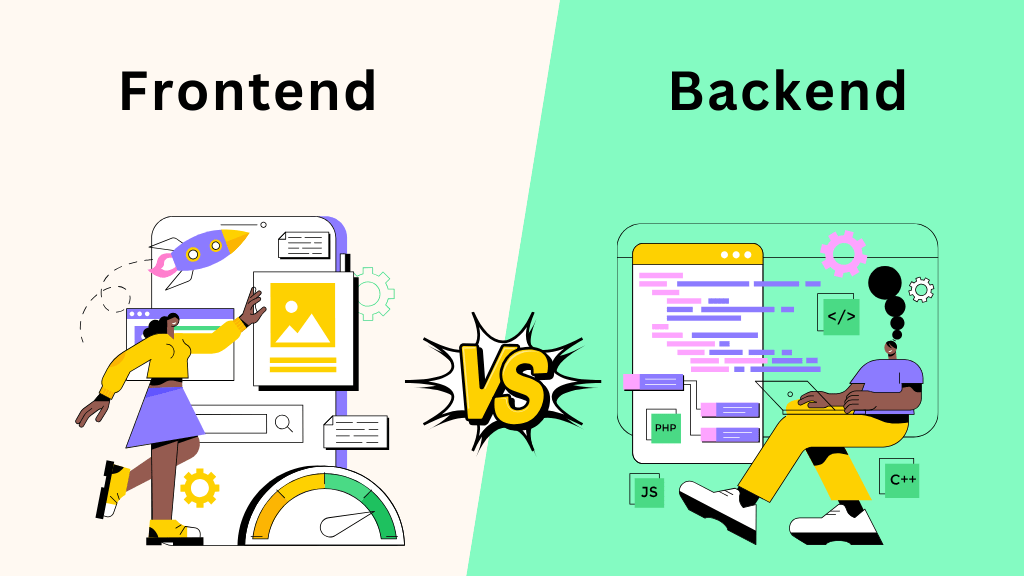
Back-End Development
Back-end development deals with server, database and application logic. It is used to make the web site work behind the scenes.
Although back-end coding is a necessity in a webpage, it does not have any direct relation to the visual design.
The Future of Website Design and Coding
The line between design and coding is becoming increasingly blurred. With the rise of no-code and low-code tools, more people can create websites without deep technical knowledge.
However, coding remains a powerful skill that provides flexibility, scalability, and control. As technology evolves, designers who understand both design principles and coding will continue to have an advantage.
 Bill Yeager, Co-Owner of High Point SEO & Marketing in CT


